Skip to content


You have one NMLS record/ID, but you hold a separate license in every state where you do business. That’s the core of NMLS multi-state licensing: the Nationwide Multistate Licensing System (NMLS) gives you a single ID and a single place to file, while each state regulator still reviews, approves and renews its own license. Some states have a separate eLicensing system that is required in addition to NMLS.
This guide covers how the NMLS system works for companies, branches and loan officers, how temporary authority lets you start sooner, and what changed in NMLS for the 2027 renewal season.
How the NMLS license system works

NMLS is run by the Conference of State Bank Supervisors (CSBS) on behalf of state regulators. Every company, branch and loan originator gets a permanent NMLS ID, and the ID never changes when you move states or employers.
There are three filings, one for each layer of your business:
| Filing | Who files it | What it covers |
|---|---|---|
| Form MU1 | The company | The company license in each state, plus control persons and financials |
| Form MU3 | The company | Each branch office that needs its own license |
| Form MU4 | The loan originator (or the company for them) | The individual MLO license in each state |
A loan officer’s state license only becomes active once a licensed company sponsors it in that state. Sponsorship must be accepted by the state and the license must be in an Approved status. So for a brokerage, adding a state usually means three things in that state: a company license, a sponsored MLO license for each originator, and a branch license if the state requires one for your office.
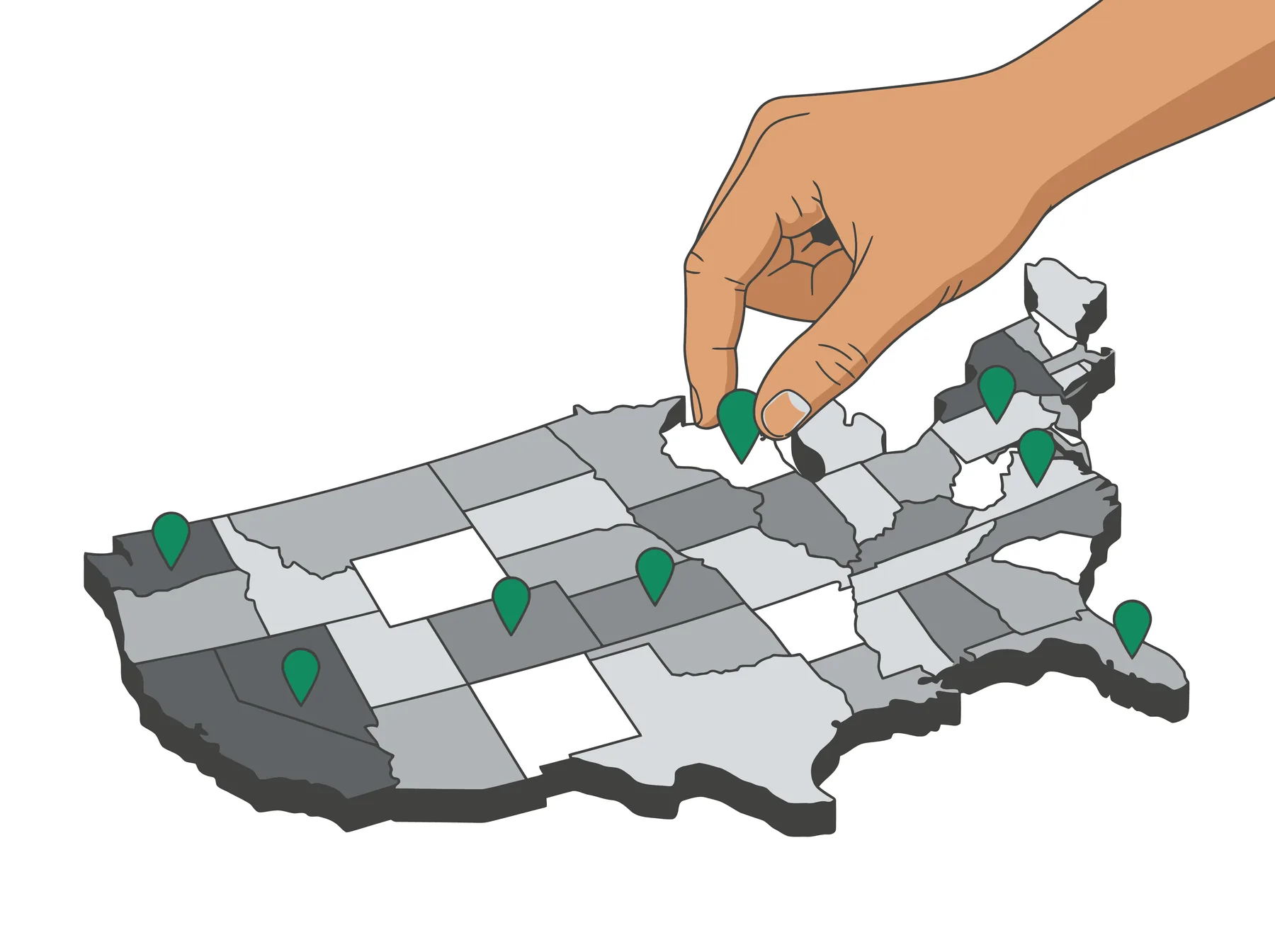
How to add a new state to your NMLS license
- Check the state’s requirements. Use the state’s checklist in the NMLS State Licensing Requirements to see the license type, fees, bond and net worth rules, and any in-state office requirement.
- File the company amendment (MU1). Add the new state license, upload the state’s required documents and post the surety bond.
- Meet the MLO requirements. Each originator needs the SAFE MLO Test with Uniform State Content, the 20-hour pre-licensing course, and any state-specific education.
- File the MLO request (MU4) and authorize the credit report and criminal background check if NMLS doesn’t have current ones on file. Only if applicable to the MLO application. MLO may be subject to additional requirements outside of NMLS.
- Sponsor the MLO. The company submits the sponsorship request in NMLS for that state.
- Clear license items. Regulators post deficiencies as license items in NMLS. Respond quickly, since an open item can hold up approval for weeks.
Temporary authority: originate while your application is pending
A federal change to the SAFE Act, in effect since November 24, 2019, created temporary authority to operate. It lets an eligible MLO originate loans in a new state for up to 120 days while that state’s license application is pending.
To qualify, the MLO generally must have been state-licensed elsewhere for the past 30 days, or federally registered for the past year. The MLO must also be employed by a company licensed in the new state, and must never have had an MLO license denied, revoked or suspended.
Temporary authority ends when the license is approved, denied or withdrawn, or after 120 days if the application is still incomplete. It’s a big advantage for brokerages recruiting experienced loan officers from banks or other states. See the NMLS temporary authority FAQ for the full rules. It is important to clarify that (TA) is not available for company licenses, or MLOs who are applying for an MLO license while the company license of the sponsoring entity is pending.
What changed in NMLS for 2027 renewals

NMLS is in the middle of a six-phase modernization. Two changes from the April 18, 2026 release now affect every renewal:
- New disclosure questions. Every individual on a company record (MLOs, control persons, branch managers and qualifying individuals) must answer and attest to the revised disclosure questions on Forms MU2 and MU4. Until they do, the company can’t submit new filings or amendments, even a simple address change.
- New employment reporting. A loan officer’s employment history now fills in from the company relationship in NMLS. Companies must add each person’s title, work phone and work email to that relationship.
CSBS asked licensees to finish both by August 31, 2026. On October 21, 2026, it said about 80% had, and that both must be done before you can submit a renewal. If anyone on your record hasn’t completed them, fix it now.
NMLS renewal dates for 2027 licenses
| What | When |
|---|---|
| Renewal window opens | November 1, 2026 |
| Deadline to renew (most states) | December 31, 2026 |
| Continuing education | Completed before you submit the MLO renewal |
| Reinstatement period (states that allow it) | January 1 to end of February 2027 |
State-licensed MLOs need at least 8 hours of NMLS-approved continuing education each year: 3 hours of federal law, 2 of ethics, 2 on nontraditional mortgage products and 1 elective. Many states add their own state-specific hours on top. In a multi-state operation, each originator must meet every state’s add-on before renewing there.
Our NMLS Renewal Checklist for 2027 Licenses walks through renewal step by step, and our NMLS CE guide covers what to finish first.
Five habits of brokers who never miss a state

- Keep one licensing calendar with every state’s renewal date, CE add-on, bond renewal and annual report deadline.
- Track bonds separately. Surety bonds renew on their own dates, and a lapsed bond can suspend a license mid-year.
- Update NMLS within the state’s deadline after any change: address, control person, branch manager or ownership. Many states require advance notice for a change (some up to 90 days).
- File your Mortgage Call Report every quarter. It’s a condition of keeping every state license, and late filings show up at renewal.
- Run a quarterly licensing check. Look for open license items, expiring bonds and anyone who still needs to finish the new disclosure questions. It will only apply to this renewal period.
Frequently asked questions
Can I use one NMLS license in multiple states? You use one NMLS ID, but each state issues its own license. You must apply for, be approved in and renew each state separately.
How long does it take to get licensed in another state? It varies by state and by how complete your filing is. Many applications take several weeks. Eligible MLOs can use temporary authority to originate for up to 120 days while they wait. You will be notified if you are eligible for or granted temporary authority.
What is NMLS temporary authority? It’s a federal rule that lets an eligible, already licensed or registered MLO originate in a new state for up to 120 days while that state reviews their application.
When is the NMLS renewal deadline? In most states, renewals must be submitted between November 1 and December 31. Some states allow reinstatement from January 1 through the end of February, with the addition of reinstatement fee.
Do I need continuing education for every state? You need the 8-hour federal CE every year, plus any state-specific hours for each state where you hold a license.
Let us manage your multi-state licensing
We handle state, branch and MLO licensing for brokerages from their first state to their fifteenth. Visit our licensing page to see how we can map your next expansion, or book a call. You can also reach us at 301.578.6015.
Sources: CSBS: Plan ahead for NMLS annual renewal (Oct. 21, 2026) · NMLS Employment Reporting Enhancement overview · CSBS NMLS Modernization Roadmap · NMLS Temporary Authority FAQ · Mayer Brown on the 2026 disclosure question changes